
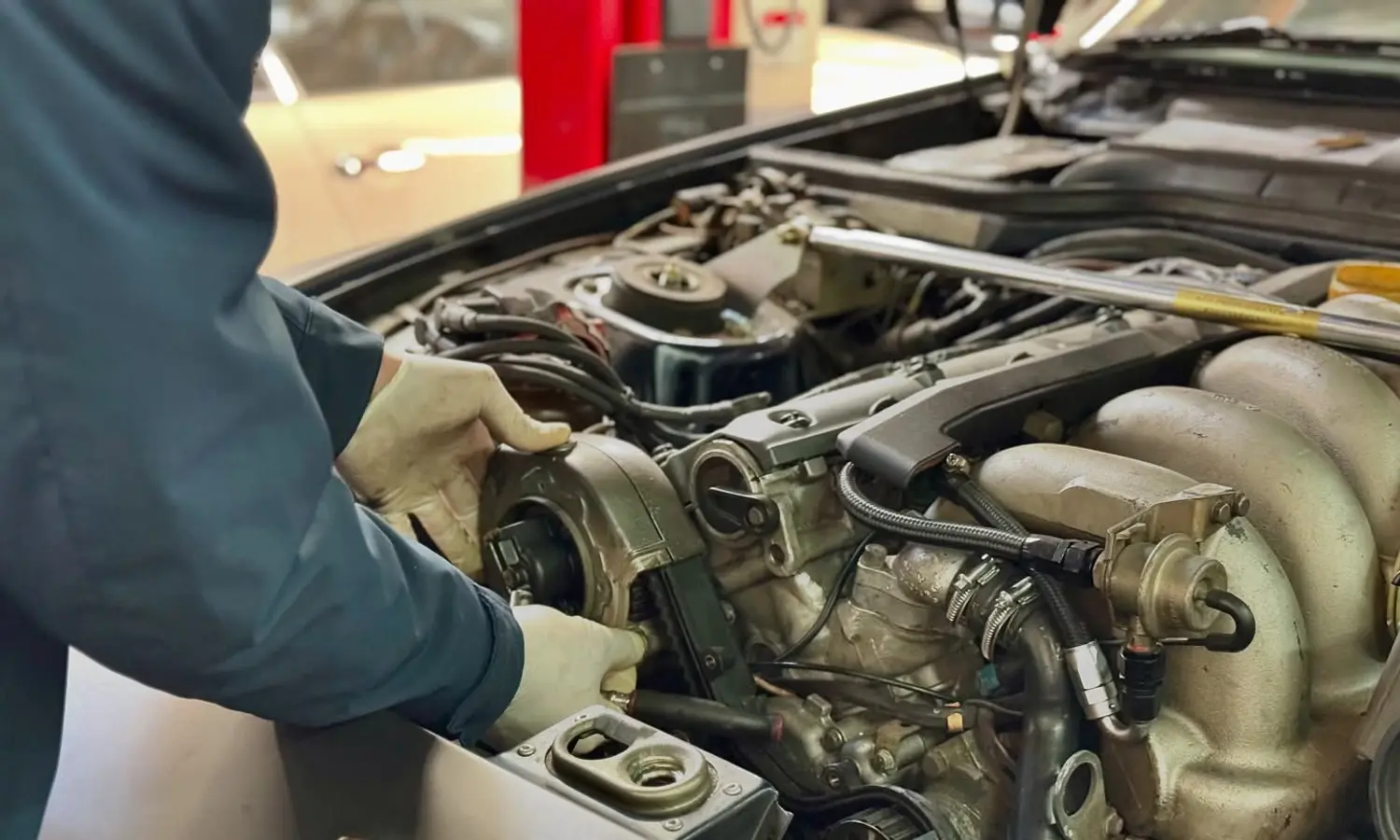
Porsche Engine Repair in Los Angeles, CA
Smoke, a cold-start rattle or a misfire can sound like the end of an engine. Most of the time the cause is a part bolted to the outside. Bring the car in, and we'll evaluate it and give you a quote.
What is Porsche engine repair?
Porsche engine repair covers the engine and the parts bolted to it: timing chains and tensioners, the air-oil separator, seals, ignition coils, injectors and engine mounts. Of all Porsche repair work, it's where a wrong diagnosis costs the most. That's because the same symptom can come from a part bolted to the outside or from inside the engine.
Porsche has built several very different engines. The 911, Boxster and Cayman use a flat-six (or, on the 718, a turbocharged flat-four), and the engine family changes with the model year. The Cayenne, Panamera and Macan use V6 and V8 engines that share little with the flat-six. Knowing which one is in your car narrows down which faults are even possible.
Oil spots on the garage floor are usually an oil leak repair, and a climbing temperature gauge starts as a cooling system repair. Spark plugs that are simply due are scheduled maintenance, not a repair. Each has its own page, so you can start with the one that matches what you see.
Why do Porsche engine problems need diagnosing first?
Because most symptoms that look internal are not. The classic example is the air-oil separator on a water-cooled flat-six. It uses a rubber diaphragm to clean oil mist out of the engine's breather gases. When that diaphragm splits, the engine sucks oil into the intake and puts out a cloud of white smoke. It looks like a ruined engine. It's usually a part that bolts on from outside.
The vacuum inside the engine can be measured at the oil filler. A healthy engine shows a small, steady reading. A failed separator shows several times that, and the fix is a new separator, not a teardown. Rattles and misfires work the same way: a reading points to the cause, and the cause decides the repair.
Some faults really are inside, and they can still be found without opening the engine. Bore scoring, where a piston scuffs its cylinder wall, is a known fault on some flat-sixes. The signs are a tick from one bank at cold start, rising oil use and one tailpipe much sootier than the other. A borescope, a small camera passed through the spark plug hole, shows the cylinder wall directly.
How Los Angeles driving affects your Porsche engine
Stop-and-go traffic on the 405 and the summer crawl through the Sepulveda Pass are hard on an engine. At walking pace there's little air moving through the engine bay, so heat builds around the coils, hoses and rubber seals that sit near the exhaust. That's why coils crack and seals harden over the years, and why a misfire often shows up at the end of a hot drive in traffic.
Short trips and parked cars cause the opposite problem. A run from Brentwood to lunch in Santa Monica rarely gets the oil fully warm, so moisture and fuel stay in it. Garaged cars in Beverly Hills and Bel Air that sit for weeks let the chain tensioners lose their oil, so a brief rattle at start-up is more common. And a hot climb up Mulholland or Topanga is often when a weak engine first shows itself.
Signs your Porsche needs engine repair
White smoke at start-up or idle
Suspect the air-oil separator first, especially if the oil filler cap is hard to pull off with the engine running.
A rattle for a few seconds when cold
Often worn chain tensioners or guides. Tell us how long it lasts and whether it's getting longer.
A flashing check engine light
A cylinder is misfiring right now. Stop driving and call. Here's what a flashing check engine light means.
One tailpipe sootier than the other
On a flat-six each side of the exhaust serves one bank of cylinders. A black, oily pipe is worth a look inside.
You're adding more oil than before
Write down how much you add and how many miles between top-ups. The trend matters more than one number.
A red oil pressure warning
Pull over and switch off. Don't restart it to see if the light clears. Call us from where the car is.
What Porsche engine diagnosis and repair usually covers
Engine work generally starts with a diagnosis, because the right repair depends on the cause. Depending on the symptom, it can involve:
- Reading fault codes and misfire counts
- Checking camshaft timing values when a rattle or timing fault is the complaint
- Measuring vacuum inside the engine when smoke or a rough idle is the problem
- Compression, leak-down or borescope checks when the signs point inside
- Looking at the oil filter for metal on engines where that matters
- Replacing outside parts such as separators, coils, tensioners and gaskets
- Rebuild or replacement when the fault is inside the engine
Porsche engine repair on every model
Each model family has its own engines and its own short list of known issues:
911
Carreras up to 2008 have the intermediate shaft bearing to keep an eye on. Later Carreras use engines without it.
Boxster and Cayman
Early cars share the M96 and M97 engines with the 911. The 718 moved to a turbocharged flat-four with its own checks.
Macan
Mostly V6 engines. Watch for oil at the timing cover and for carbon on the intake valves, which shows as a rough cold start.
Cayenne
V6 and V8 engines pulling a heavy car. Stretched timing chains on some high-mileage engines and valve cover gaskets are common jobs.
Panamera
V6 and V8 engines that cover long distances. Valve cover gaskets can drip onto the exhaust, which you smell before you see.
Porsche engine repair or rebuild: which does your car need?
Most engine repairs happen with the engine still in the car: a separator, a set of coils, chain tensioners, a gasket. A rebuild means taking the engine out and apart to fix what's inside, like a scored cylinder or a failed bearing. The gap in cost between the two is huge, which is why the diagnosis matters so much.
If the tests point inside, the options are usually rebuild, replacement or monitoring. On some engines, keeping an eye on the oil filter and the oil use is a sensible choice for a while. Which option makes sense depends on the engine, the mileage and what the tests show.
When you don't need Porsche engine repair
A small puff of smoke on a cold start that clears in seconds is normal on a flat-six, since a little oil settles past the rings in horizontal cylinders. So is some oil use between services. And the intermediate shaft bearing doesn't always need doing right away. On 1999 to 2005 cars with a manual gearbox, the bearing can usually be done with the clutch. 2006 to 2008 engines use a larger bearing that can't be changed without opening the engine, so on those cars owners usually keep an eye on the oil filter instead.
What does need attention is change. Smoke that lingers, oil use that climbs from one top-up to the next, or a rattle that lasts longer each cold start is worth an evaluation. Bring the car in and we'll give you a quote.
Why Westside Porsche owners choose The Werkstatt
Engine work is where experience pays for itself, and Porsche is all we've worked on for more than 30 years. We're an independent shop at 10527 Santa Monica Blvd in West Los Angeles, and we work on every model line, from the 911 and Boxster to the Cayenne and Panamera. That covers the flat-six, the 718's flat-four and the V6 and V8 engines of the Cayenne, Panamera and Macan.
Getting started is simple. Bring the car in, we'll evaluate the engine, and you'll get a quote. If you'd rather start online, request a quote and we'll reach out as soon as possible.
Book Porsche engine repair in West Los Angeles
Have the model, year and mileage handy, and note when the problem shows up: cold or hot, at idle or under load, and whether the oil level has changed. For Porsche engine repair near you in Los Angeles, call (310) 310-3959 or request a quote and we'll reach out as soon as possible. Bring the car to the shop on Santa Monica Boulevard in West LA, and we'll evaluate it and give you a quote. Before you wash the car, photograph both tailpipes, because the soot tells part of the story.
We're open Monday to Friday, 8 AM to 6 PM, and closed on weekends. If the oil pressure warning is red, don't drive the car to us; call from where it is. Otherwise, call ahead so we can plan the day around your car.
Get a Quote
Tell us what's going on. Bring the car in for an evaluation and a quote, or request one online and we'll reach out as soon as possible.
Call (310) 310-3959Porsche Engine Repair FAQs
Smoke, a cold-start rattle or a misfire can sound like the end of an engine. Most of the time the cause is a part bolted to the outside. Bring the car in, and we'll evaluate it and give you a quote.
Why is my oil filler cap hard to pull off with the engine running?
Does my Porsche have the IMS bearing problem?
What causes a misfire on a Porsche?
How much does Porsche engine repair cost?
Is it safe to drive with white smoke from the exhaust?
My temperature gauge is climbing. Is that an engine problem?
REVIEWS FROM LOS ANGELES PORSCHE OWNERS
What Porsche Owners in Los Angeles, CA Say
Related services
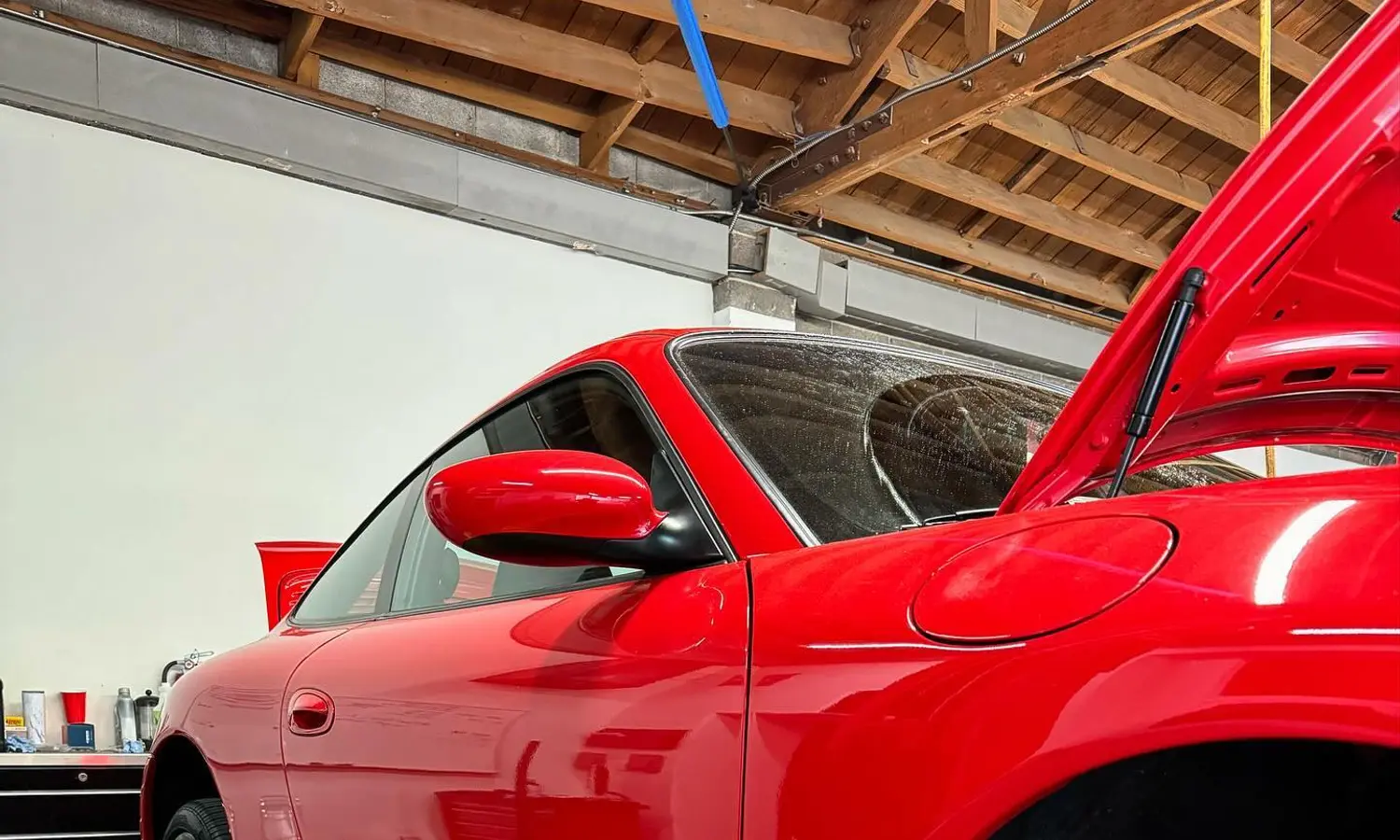
Porsche Oil Leak Repair
Oil leaks from valve covers, rear main seals, timing covers, tubes and O-rings on every Porsche model.
Learn more about Porsche Oil Leak Repair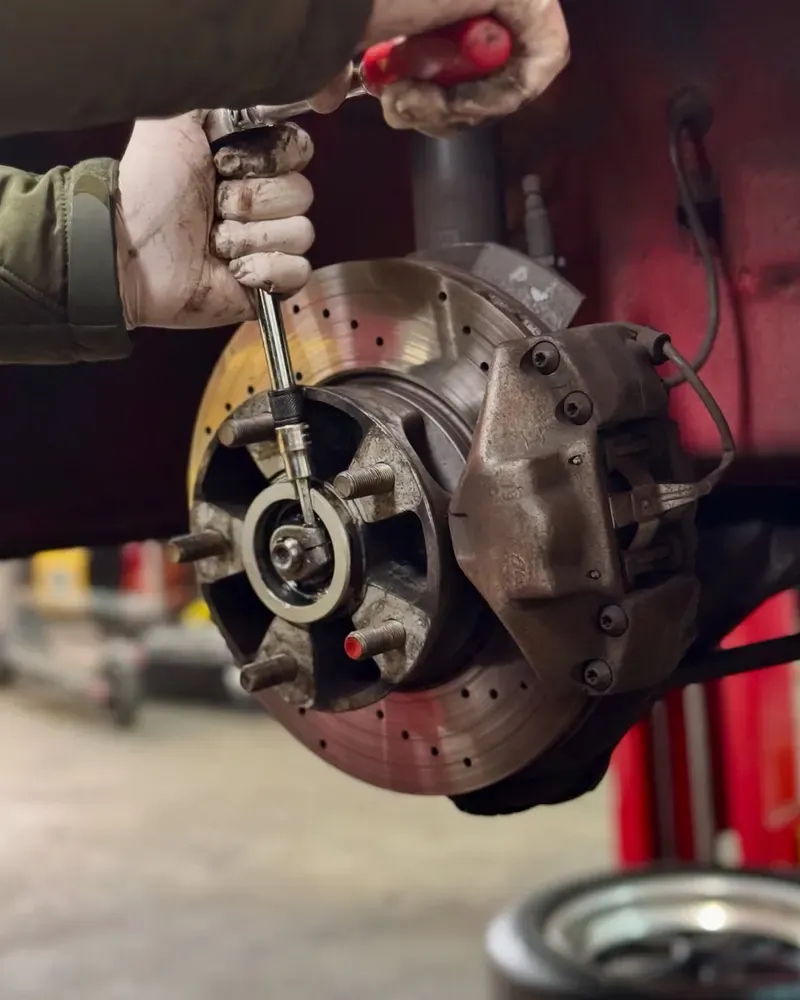
Porsche Brake Repair
Pads, discs, calipers and wear sensors, including PCCB ceramic brakes, on every Porsche model.
Learn more about Porsche Brake Repair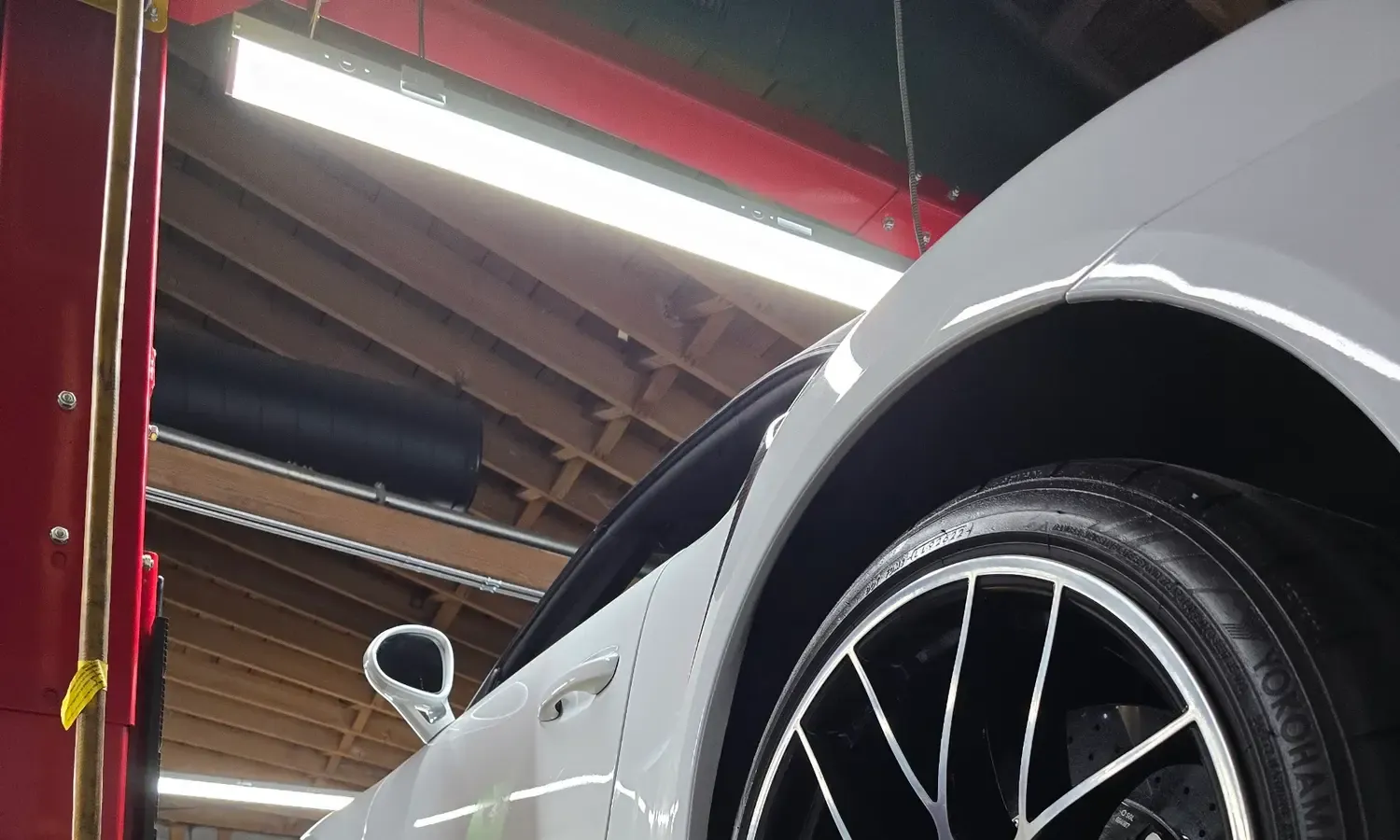
Porsche Suspension Repair
PASM dampers, control arms, bushings, drop links and air suspension faults on every Porsche model.
Learn more about Porsche Suspension Repair
Porsche PDK & Transmission Repair
PDK, Tiptronic and manual gearbox faults, from shift warnings and clutch slip to fluid leaks.
Learn more about Porsche PDK & Transmission Repair
Porsche Cooling System Repair
Coolant leaks, overheating, water pumps, radiators and expansion tanks on every Porsche model.
Learn more about Porsche Cooling System Repair
Porsche A/C Repair
Warm air from the vents, which is usually a refrigerant leak and not the compressor, on every Porsche model.
Learn more about Porsche A/C RepairPorsche Engine Repair Near Los Angeles, CA
Searching for Porsche engine repair near Sawtelle, Brentwood, Westwood or Santa Monica? The Werkstatt is at 10527 Santa Monica Blvd in West Los Angeles, just south of Westwood and about a mile east of the 405.
We diagnose and repair timing chains and tensioners, air-oil separators, timing faults, misfires, coils, injectors and engine mounts for owners from Brentwood, Pacific Palisades, Santa Monica, Sawtelle, West LA, Rancho Park and nearby areas.
Whatever you call it, a Porsche engine specialist or a Porsche engine diagnosis, the first step is an evaluation and a quote. Most symptoms start outside the engine.
10527 Santa Monica Blvd
Los Angeles, CA 90025
(310) 310-3959
Mon – Fri: 8:00 AM – 6:00 PM
Sat – Sun: Closed
Need Porsche Service in Los Angeles, CA?
Call (310) 310-3959 and tell us the model, the year and what the car is doing. We work on Porsche only.
📍 Serving Los Angeles and Surrounding Areas